When most ocean swimmers think about training, freestyle dominates the conversation. It’s the stroke used in races, training sessions, and long-distance swims. But if you’re only swimming freestyle, you could be missing out on one of the most valuable tools for improving your performance, strength, and longevity in the water: backstroke.
While it may not seem like the obvious choice for an ocean swimmer, backstroke offers a range of benefits that can help you swim faster, stay healthier, and become more comfortable in open water.
1. Improves shoulder health
Ocean swimmers spend thousands of strokes with their arms rotating forward. Over time, this repetitive movement can place significant stress on the shoulders, particularly if your technique isn’t perfect.
Backstroke works many of the same muscle groups as freestyle, but in a different movement pattern. The backward arm recovery encourages greater shoulder mobility, activates the muscles that stabilise the shoulder joint, and helps balance out the muscular demands of freestyle.
Adding a few hundred metres of backstroke to your weekly training can help reduce the risk of overuse injuries and keep your shoulders feeling fresher throughout the season.
2. Strengthens your core
Good backstroke isn’t just about moving your arms. Like freestyle, it relies heavily on a strong and stable core.
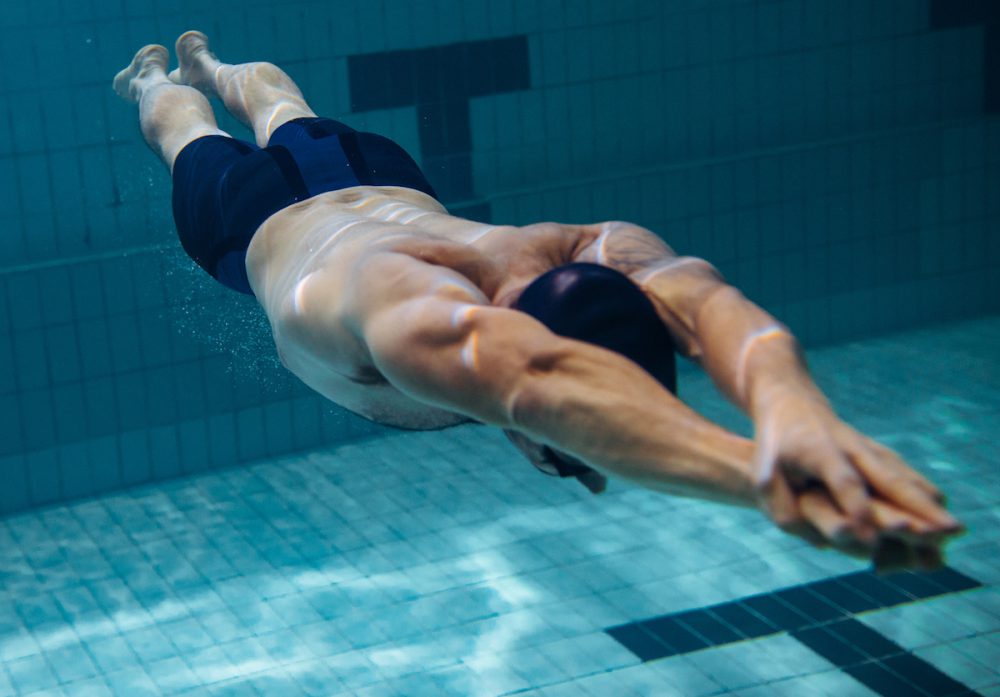
To maintain a streamlined position on your back, your abdominal muscles, lower back, and hips must work continuously to keep your body aligned. This core engagement translates directly to freestyle and open-water swimming, helping you maintain better body position when fatigue sets in.
The stronger your core, the more efficiently you’ll move through the water.
3. Encourages better body position
One of the biggest challenges for developing swimmers is maintaining a high, streamlined body position.
Backstroke provides immediate feedback. If your hips or legs drop from the streamline positionion, you’ll notice yourself sinking immediately. Over time, regular backstroke helps swimmers develop a greater awareness of body position and balance in the water.
This awareness often carries over into freestyle, helping swimmers reduce drag and improve efficiency.
4. A different way to sight
While you won’t be racing backstroke in your next ocean swim, it can be a valuable tool for developing your sighting skills and overall awareness in the water.
Swimming on your back encourages you to notice landmarks above the horizon. In the ocean, these might include headlands, buildings, trees, lifeguard towers, or other prominent features that can serve as reliable sighting points when navigating a course.
Backstroke can also be particularly useful when returning to shore through the surf zone. It gives you an extended view of what’s happening behind you, allowing you to anticipate approaching waves and choose the most appropriate response, whether that’s stopping to dive under a dumping wave, catching a runner, or body surfing a wave towards the beach.
5. Great for recovery during long ocean swims
Many marathon swimmers and open water swimmers occasionally roll onto their backs during training swims to stretch out, relax their shoulders, or take in nutrition.
Being comfortable swimming backstroke for short periods can provide a useful option during longer swims, helping reduce fatigue and keep moving during vital nutrition refuel moments.
How to include backstroke in your training
You don’t need to dedicate entire sessions to backstroke to reap the benefits. Start small:
- Include 200-400m of backstroke during your warm-up or cool-down.
- Alternate 100m freestyle and 100m backstroke during recovery sets.
- Add kicking sets on your back to strengthen your legs and improve body position.
Even a few hundred metres per week can make a noticeable difference.